The passage I choose is when superstitious Caesar awake and frightened and just asked his servant to go the priests and sacrifice an animal. Calpurnia enters and begs him to stay at home because she had a dream about her husband which was an omen and according to Calpurnia it wasn't a good one. Convinced, Caesar decides to stay at home, however cunning Decius comes and enters the picture, and convinces that Calpurnia's dream is actually a good omen. I found that this passage was important because it was the one chance Caesar had right under his nose that something wrong was going to happen to the capitol and he could decline going there. However, he is gullible enough to fall for Decius' trap. I also think that Shakespeare put this part in the play for the audience, for foreshadowing what is going to happen soon in either the next act or scene. This passage shows not only foreshadowing but also Dramatic Irony because the audience finds it pretty obvious that Caesar is going to die however the main character Caesar doesn't realize that he is going to be killed.
Act 2 scene 2
lines 7-105 (some of them)
(Calpurnia enters)
Calpurnia- What mean you Caesar? Think you walk forth? You shall not stir out of your house today.
Caesar- Caesar shall forth. The things that threatened me never looked but on my back; when they shall see the face of Caesar, they’re vanished.
Calpurnia- Caesar, I never stood on ceremonies
Yet now they fright me. There is one within,
Besides the tings that we have heard and seen, Recounts most horrid sights seen by the watch,
A lioness hath whelped in the streets
And graves here yawned and yielded up their dead;
Fierce fiery warriors fight upon the clouds
In ranks and squadrons and form of war
Which drizzled blood upon the capitol.
Caesar- The gods do this in shame of cowardice:
Caesar should be a beast without a heart
If he should stay at home today for fear
No, Caesar shall not. Danger knows well
That Caesar is more dangerous than he.
We are two lions litter’d in one day,
And I the elder and more terrible,
And Caesar should go forth.
Calpurnia: Alas my lord,
Your wisdom is consum’d in confidence.
Do not go forth today: call it my fear
That keeps you in the house, and not your own.
We’ll send Mark Antony to the Senate House,
And he shall say you are not well today.
Let me upon my knee prevail in this.
Caesar: Mark Antony shall say I am not well,
And for thy humour
I will stay at home.
(Calpurnia leaves)
Decius: Caesar, all hail! Good morrow, worthy Caesar.
I come to fetch you to the Senate House.
Caesar: And you are come in very happy time
To bear my greeting to the senators,
And tell them I will not come today:
Can not is false; and I dare not, falser;
I will not come today. Tell them so, Decius
Decius: Most mighty Caesar, let me know some cause,
Lest i be laugh'd at when i tell them so.
Caesar:......Because i love you, I will let you know;
Calpurnia here, my wife, stays me at home.
She dreamt tonight she saw my statue,
Which like a fountain with a hundred spouts
Did run pure blood;and many lusty Romans
Came smiling,and did bathe their hands into it.
And these does she apply for warnings and portents
And evils imminent; and on her knees
Hath begg'd that i will stay at home today.
Decius: This dream is all amiss interpreted
It was a vision fair and fortunate:
Your statue spouting blood in many pipes,
in which so many smiling Romans bath'd,
Reviving blood, and that great men shall press
For tinctures, stains, relics, and cognizance.
Caesar: And this way have you well expounded it.
Decius:......And know it know. The Senate have concluded
To give this day a crown to a mighty Caesar.
If you shall send them word you will not come,
Their mind may change. Besides, it were a mock
apt to be render'd for some one to say
'Break up with the Senate till another time,
When Caesar's wife shall meet with better dreams.
If Caesar hid himself, shall they not whisper,
'Lo Caesar is afraid?'
Pardon me, Caesar; for my dear dear love
To your proceedings bids me tell you this,
And reason to my love is liable.
Caesar: How foolish do your fears seem now, Calpurnia!
I am ashamed I did yield to them
Give me my robe, for I will go.
My partner is Vandana for this act.
Friday, February 12, 2010

Sunday, November 22, 2009
The School of Athens.
How is art a mirror of society?
Art reflects society in various of ways. Usually everyday life is inspiration for artists for their paintings, the structure of life, in the Renaissance it was particularly human life, knowledge and understanding, architecture and the classical life then, which were the Romans and the Greeks. The people of the Renaissance learnt new ways to work on their architecture, paintings, sculptures relying on the Greeks and the Romans. Learning from the ancient texts, showing how the Greeks and Romans were more advanced at these types of art. In the painting "The School of Athens" by Raphael, shows people who were striving to gain more knowledge like Pythagoras, Aristotle, Plato and other great Greek people. All in the "school" learning from each other and listening intently. Every painting in the Renaissance had a meaning behind it, the artist had logic behind the painting and an object or a person or an animal is n0t placed in the painting just because the artist feels like it, there is a reason. In the School of Athens there are two people in the middle Plato (the one in the red and grey/white) and his apprentice Aristotle (the one in the brown and blue). Plato was a person who believed there was mathematics, something that couldn't be seen, even though it was there. While is apprentice Aristotle observed and studied the science of visable things you can touch and see. Observers have realized that in this painting everyone who is to our right of Aristotle are all scientists of somesort and everyone to the left of Plato are all people who study the unseen mathematical part of the world in depth. They all reflect the society of when the Renaissance was at it's highest peck of learning.
 If I was part of Raphael's "The School of Athens" I would be both Plato and Aristotle, the two main figures in the painting. The two figures split the room in half, a mathematical side with something higher in the world and also a scientific side. To me I believe both sides, first of all I am greatful for all the science that was founded and developed at that time, for it has helped us in our world today, with all our technology. Most of the science that was found then we still use. But on Plato's end, I believe that there is something higher than us out there in the universe, that is what my culture and belief has taught me. But I sometimes find myself thinking, without the fact that says we have evolved from apes, how were we formed and what made the universe? I've always thought that the universe couldn't have just been there in the begining of time, everything has a creation, well, thats what I believe.
Art reflects society in various of ways. Usually everyday life is inspiration for artists for their paintings, the structure of life, in the Renaissance it was particularly human life, knowledge and understanding, architecture and the classical life then, which were the Romans and the Greeks. The people of the Renaissance learnt new ways to work on their architecture, paintings, sculptures relying on the Greeks and the Romans. Learning from the ancient texts, showing how the Greeks and Romans were more advanced at these types of art. In the painting "The School of Athens" by Raphael, shows people who were striving to gain more knowledge like Pythagoras, Aristotle, Plato and other great Greek people. All in the "school" learning from each other and listening intently. Every painting in the Renaissance had a meaning behind it, the artist had logic behind the painting and an object or a person or an animal is n0t placed in the painting just because the artist feels like it, there is a reason. In the School of Athens there are two people in the middle Plato (the one in the red and grey/white) and his apprentice Aristotle (the one in the brown and blue). Plato was a person who believed there was mathematics, something that couldn't be seen, even though it was there. While is apprentice Aristotle observed and studied the science of visable things you can touch and see. Observers have realized that in this painting everyone who is to our right of Aristotle are all scientists of somesort and everyone to the left of Plato are all people who study the unseen mathematical part of the world in depth. They all reflect the society of when the Renaissance was at it's highest peck of learning.
 If I was part of Raphael's "The School of Athens" I would be both Plato and Aristotle, the two main figures in the painting. The two figures split the room in half, a mathematical side with something higher in the world and also a scientific side. To me I believe both sides, first of all I am greatful for all the science that was founded and developed at that time, for it has helped us in our world today, with all our technology. Most of the science that was found then we still use. But on Plato's end, I believe that there is something higher than us out there in the universe, that is what my culture and belief has taught me. But I sometimes find myself thinking, without the fact that says we have evolved from apes, how were we formed and what made the universe? I've always thought that the universe couldn't have just been there in the begining of time, everything has a creation, well, thats what I believe.
Thursday, October 8, 2009
Leonardo da Vinci, The man of the Renaissance
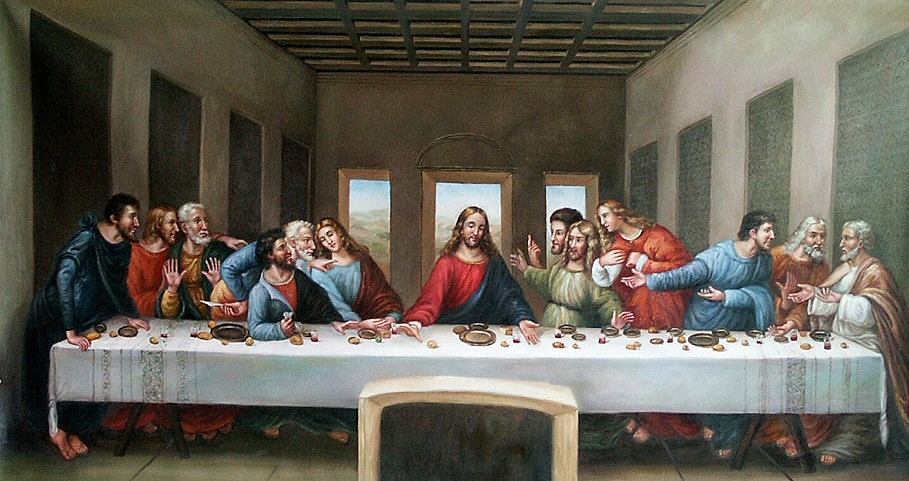
The Renaissance was a time where people started to discover and rediscover information and various types of arts. An individual that lived during that time was Leonardo da Vinci, The Renaissance man. Leonardo was manly called the Renaissance man because he was talented in many arts, such as mathematics, science, art, architecture, sculptures and many more. Some famous paintings painted by him were The last supper and The Mona Lisa. He discovered many secrets about the world, invented objects which were never tested on until not even Leonardo knew if his ideas would work. However they were accurate which made him a genius. Leonardo was a very popular man and brought wealth and fortune to his city, Florance. Thus, Leonardo was called a Renaissance man not because he just lived during that time, but also because he was one gifted person.
Sunday, September 27, 2009
Forever Hope

Hope is the Thing with Feathers
By: Emily Dickinson
"Hope" is the thing with feathers
That perches in the soul
And sings the tune without the words
And never stops at all,
And sweetest in the gale is heard;
And sore must be the storm
That could abash the little bird
That kept so many warm.
I've heard it in the chillest land
And on the strangest sea,
Yet never, in extremity,
It asked a crumb of me.
HOPE, is like an invisible light, even if we don't realize it, it is always there with us. Every individual contains an instinct for hope. When one is faced with a problem, we automatically think "I hope that I will be able to overcome (the problem)." or "I wish I could do (the problem)". Hope is sort of something that can keep us believing that something good might happen even if there is no possible way. We immediately want to feel and think that there is another way out. Hope is one thing that will forever help us with our life.
Wednesday, September 23, 2009
Truth

Truth conceals itself behind the closed door of the heart,
Dressed in a delicate white gown.
Whispering innocently, "I may bring happiness, I may bring grief, just depends on how one receives me."
In the novel The Alchemist, the author sends a message,a message about truth. To be true not to only others but to yourself as well. The protagonist, Santiago listens to his heart to find his destiny, "My heart is a traitor," the boy said to the alchemist when they had paused to rest the horses. "It doesnt want me to go on."
"That makes sense," the alchemist answered. "Naturally its afraid that, in perusing your dream, you might lose everything you have won." (cohelo 123).
A Step Closer to Destiny
“I’m an adventurer looking for treasure,” he said to himself (Coelho 40). Santiago, the protagonist in the story The Alchemist, a shepherd boy in Andalusia, Spain is pursuing his dreams of traveling. Santiago believes that he knows everything he has to know about his life as a shepherd boy, however, that is not what his destiny has in store for him. One night underneath a sycamore tree in Spain, the boy has a dream about a bundle of treasure underneath the Pyramids of Egypt. The King of Salem, Melchezedek and a gypsy convinced the boy to follow his dream, thus following his destiny. Along the way Santiago met a lot of different people which one way or another helped him achieve his destiny. Santiago displays many different unique characteristics; he is truly described by being brave, adaptable and observant. Which all work together to help him find his destiny.
During the journey there were a couple of obstacles Santiago had to face. No matter what happened, he had to show his bravery to reach his destiny. First of all, at the beginning of the book Santiago decided to sacrifice his old life as a shepherd boy and sold nearly all of his sheep to embark on his new adventure. He made a deal with Melchezedek, the King and priest of Salem, to sell his sheep for two stones, Urim and Thummim, to help him start his journey. ‘“It is I who dared so,” he repeated, and he lowered his head to receive a blow from the sword. “Many lives will be saved, because I was able to see through the Soul of the World.’ The sword didn’t fall. Instead, the stranger lowered it slowly until the point touched the boy’s forehead. It drew a droplet of blood.” (105). At this time Santiago was faced with a “stranger” who he assumed was from the attacking army against the Oasis, a cloaked man asking Santiago why he told the chieftains. Of course Santiago was assuming that this man would kill him. He gathered his courage and told the stranger that it was a good thing that he told the oasis, as now the enemy force wouldn’t have the slightest chance of winning. Little did Santiago know, the “stranger” turned out to be the Alchemist (another character who helps Santiago) testing his bravery and courage. The bravery and courage helped him defeat all the obstacles in his path also causes him to be adaptable.
While Santiago passed all of his obstacles there was another characteristic that matters: adaptability. First of all, the huge adaptable change for Santiago was to leave his life in Spain and go to Egypt in Africa. Since he wanted to follow his destiny he had to give up a few things such as his old life as a shepherd boy, his sheep, and his supposed love for the merchant’s daughter. “When I had my sheep, I was happy. People saw me coming and welcomed me, he thought. But now I’m sad and alone. I’m going to become bitter and distrustful of people because one person betrayed me. I’m going to hate those who have found their treasure because I had never found mine. And I’m going to what little I have, because I’m too insignificant to conquer the world” (37). Santiago had just arrived in Africa. Everything in this “world” was completely different from the world he left in Spain. Santiago met a friend who turned out to be a thief, taking all of his money and leaving poor Santiago in the midst of the market. From then on the boy understood that there aren’t that many people that can be trusted and learns how to accept the fact that he was alone and he had to figure out how to get money and live off of his earnings. In the journey many different things were thrown at this flexible character, however he was able to be adaptable and often observant. Santiago awareness helps him observe the wonders of the world.
Everyone has a right to follow their own dreams, like Santiago they all have different qualities, which helps them with their life. For Santiago, he follows his destiny with bravery, adaptability and observance. With bravery, anyone can overcome the obstacles in their way; adaptability one can face new and or difficult changes without any problems or complains. Finally with observance, one is aware of their surroundings, making every decision carefully. For an individual their traits might not be the same as Santiago, however it brings them a step closer to their destiny.
My Journey

So far in my life, I have realized and learned from various incidents and mistakes, and funnily enough I found out that being an apologetic person is not always appalling, which describes me in a way. Usually when people look at or think about an apologetic people they somewhat see a non-confident person, who messes up a lot. However, to me it's a bit different. From what I have realized being an apologetic is really beneficial, one can easily realize if they are doing something wrong or if they did something wrong they can say sorry or try to make up for what they have done wrong, learning a new lesson. Like the saying "you learn from your mistakes." and learning from my mistakes brings me a step closer to fulfilling my destiny. Everyone knows that sometimes saying sorry for something you have done is not as easy as it seems, it requires a lot of courage, courage that helps you through your "journey".Also helps you move on and take away the guilt of something that went wrong. However, it has it's flaws as well if your too apologetic no one will really take you seriously, or they will change their thoughts of you. There has to be a balance.
During the journey there were a couple of obstacles Santiago had to face. No matter what happened, he had to show his bravery to reach his destiny. First of all, at the beginning of the book Santiago decided to sacrifice his old life as a shepherd boy and sold nearly all of his sheep to embark on his new adventure. He made a deal with Melchezedek, the King and priest of Salem, to sell his sheep for two stones, Urim and Thummim, to help him start his journey. ‘“It is I who dared so,” he repeated, and he lowered his head to receive a blow from the sword. “Many lives will be saved, because I was able to see through the Soul of the World.’ The sword didn’t fall. Instead, the stranger lowered it slowly until the point touched the boy’s forehead. It drew a droplet of blood.” (105). At this time Santiago was faced with a “stranger” who he assumed was from the attacking army against the Oasis, a cloaked man asking Santiago why he told the chieftains. Of course Santiago was assuming that this man would kill him. He gathered his courage and told the stranger that it was a good thing that he told the oasis, as now the enemy force wouldn’t have the slightest chance of winning. Little did Santiago know, the “stranger” turned out to be the Alchemist (another character who helps Santiago) testing his bravery and courage. The bravery and courage helped him defeat all the obstacles in his path also causes him to be adaptable.
While Santiago passed all of his obstacles there was another characteristic that matters: adaptability. First of all, the huge adaptable change for Santiago was to leave his life in Spain and go to Egypt in Africa. Since he wanted to follow his destiny he had to give up a few things such as his old life as a shepherd boy, his sheep, and his supposed love for the merchant’s daughter. “When I had my sheep, I was happy. People saw me coming and welcomed me, he thought. But now I’m sad and alone. I’m going to become bitter and distrustful of people because one person betrayed me. I’m going to hate those who have found their treasure because I had never found mine. And I’m going to what little I have, because I’m too insignificant to conquer the world” (37). Santiago had just arrived in Africa. Everything in this “world” was completely different from the world he left in Spain. Santiago met a friend who turned out to be a thief, taking all of his money and leaving poor Santiago in the midst of the market. From then on the boy understood that there aren’t that many people that can be trusted and learns how to accept the fact that he was alone and he had to figure out how to get money and live off of his earnings. In the journey many different things were thrown at this flexible character, however he was able to be adaptable and often observant. Santiago awareness helps him observe the wonders of the world.
Everyone has a right to follow their own dreams, like Santiago they all have different qualities, which helps them with their life. For Santiago, he follows his destiny with bravery, adaptability and observance. With bravery, anyone can overcome the obstacles in their way; adaptability one can face new and or difficult changes without any problems or complains. Finally with observance, one is aware of their surroundings, making every decision carefully. For an individual their traits might not be the same as Santiago, however it brings them a step closer to their destiny.
My Journey

So far in my life, I have realized and learned from various incidents and mistakes, and funnily enough I found out that being an apologetic person is not always appalling, which describes me in a way. Usually when people look at or think about an apologetic people they somewhat see a non-confident person, who messes up a lot. However, to me it's a bit different. From what I have realized being an apologetic is really beneficial, one can easily realize if they are doing something wrong or if they did something wrong they can say sorry or try to make up for what they have done wrong, learning a new lesson. Like the saying "you learn from your mistakes." and learning from my mistakes brings me a step closer to fulfilling my destiny. Everyone knows that sometimes saying sorry for something you have done is not as easy as it seems, it requires a lot of courage, courage that helps you through your "journey".Also helps you move on and take away the guilt of something that went wrong. However, it has it's flaws as well if your too apologetic no one will really take you seriously, or they will change their thoughts of you. There has to be a balance.
Sunday, April 12, 2009
What I think.
"Trying hard to reach out
But when I tried to speak out
Felt like no one could hear me
Wanted to belong here
But something felt so wrong here
So I prayed I could break away
I'll spread my wings and I'll learn how to fly
I'll do what it takes til' I touch the sky
And I'll make a wish
Take a chance
Make a change
And breakaway"
To breakaway, that's how I think my adolescence would be described. In other words adolescence to me is being able to obtain responsibility, freedom, risks and a lot of pressure for the future and problems in between which is all described breakaway. For instance staying loyal to my friends, I have a huge mouth which always lead to bad things. After sometimes your friends can't trust you (I don't blame them...)and it's hard retrieving that trust which I thought described "Wanted to belong here, but something felt so wrong here". At home my parents give me a lot of liberty and sometimes I enjoy it, other times I don't. When they give me too much I usually find myself lost in a descision. And other times my parents don't properly listen to what I have to say, which is kind of unfair which descibes this passage from the lyrics "Trying hard to reach out, but when I tried to speak out, felt like no one could hear me". It might seem weird but I am afraid of growing up. Whenever I think about my life after adolescence (my stage right now), when I become an adult I'd have to get a job for myself . I imagne myself getting a horrible job and that wont pay enough and I won't be able to get support from my parents. And right now I don't really know what I want to be when i grow up and as I get older the harder it gets. Which is basically the rest of the song. Trying to "breakaway" from all my fears for the future and my problems. Look at the link from the last post and listen to the song!!!!!
But when I tried to speak out
Felt like no one could hear me
Wanted to belong here
But something felt so wrong here
So I prayed I could break away
I'll spread my wings and I'll learn how to fly
I'll do what it takes til' I touch the sky
And I'll make a wish
Take a chance
Make a change
And breakaway"
To breakaway, that's how I think my adolescence would be described. In other words adolescence to me is being able to obtain responsibility, freedom, risks and a lot of pressure for the future and problems in between which is all described breakaway. For instance staying loyal to my friends, I have a huge mouth which always lead to bad things. After sometimes your friends can't trust you (I don't blame them...)and it's hard retrieving that trust which I thought described "Wanted to belong here, but something felt so wrong here". At home my parents give me a lot of liberty and sometimes I enjoy it, other times I don't. When they give me too much I usually find myself lost in a descision. And other times my parents don't properly listen to what I have to say, which is kind of unfair which descibes this passage from the lyrics "Trying hard to reach out, but when I tried to speak out, felt like no one could hear me". It might seem weird but I am afraid of growing up. Whenever I think about my life after adolescence (my stage right now), when I become an adult I'd have to get a job for myself . I imagne myself getting a horrible job and that wont pay enough and I won't be able to get support from my parents. And right now I don't really know what I want to be when i grow up and as I get older the harder it gets. Which is basically the rest of the song. Trying to "breakaway" from all my fears for the future and my problems. Look at the link from the last post and listen to the song!!!!!
Subscribe to:
Posts (Atom)
